Study Medicine at WBU – Where Global Standards, Clinical Excellence, and Innovation Shape the Doctors of Tomorrow!
Why Choose the Study Program in Medicine at WBU?
· Offers a transformative academic journey rooted in international standards, innovation, and excellence.
· WBU is a fourth-generation university with a progressive approach combining technology, interdisciplinary learning, and global partnerships.
· Prepares medical professionals for the challenges of 21st-century healthcare.
· Features a modern, needs-driven curriculum aligned with evolving societal and healthcare demands.
· Developed in collaboration with the Cambridge University Medical Education Group (CUMEG).
· Curriculum is exclusively designed for WBU, reflecting the Bologna Charter and EU directives.
· Ensures strong foundations for professional mobility, critical thinking, and evidence-based practice internationally.
What Does WBU Offer?
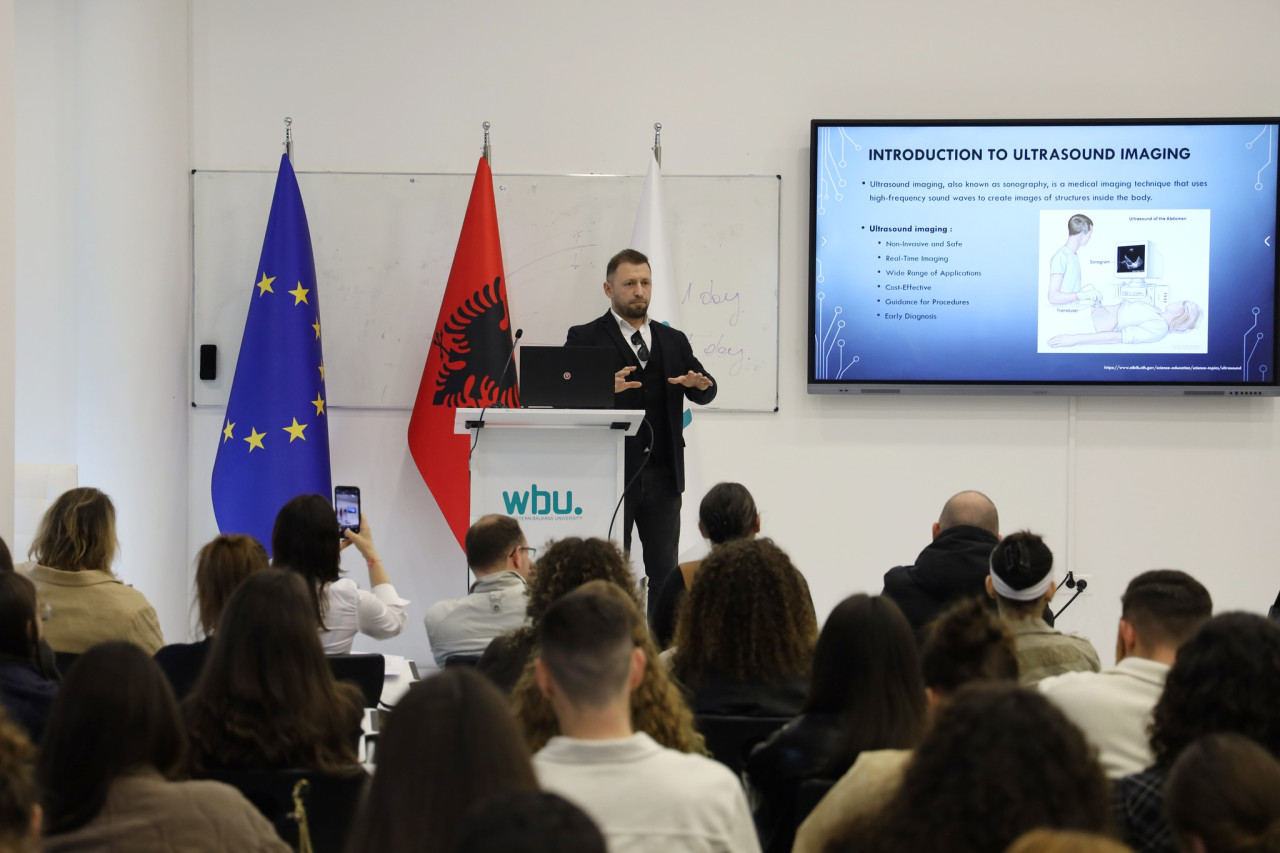
At WBU, students benefit from an educational ecosystem that prioritizes academic rigor, mentorship, and innovation. Over 90% of the academic staff hold scientific degrees or titles, ensuring that students are mentored by nationally and internationally experienced faculty. The teaching strategy emphasizes an inclusive, student-centered approach, with small-group instruction, case-based learning, and clinical simulation integrated from the first year of study.
Merit-Based Scholarships. WBU offers a variety of scholarships for outstanding students, including the Excellence Scholarship, Institutional Scholarship, Partner Institutions Scholarship with tuition reductions up to 100%.
State-of-the-Art Laboratories and Skills Labs. Students train in cutting-edge facilities equipped with modern tools for anatomy, physiology, biochemistry, molecular biology, pathology, microbiology, and simulation-based clinical training. These laboratories are designed to prepare students for accurate diagnostics, safe procedures, and evidence-based care from the earliest stages of their education.
Professional Practice in Leading HospitalsClinical training is a core part of the curriculum. Students gain hands-on experience in leading hospitals, health centers, and laboratories across Albania, including partnerships with the American Hospital, International Hospital (Hygeia), public health institutions. Starting as early as the first year, clinical placements provide real-world exposure in internal medicine, surgery, pediatrics, gynecology, psychiatry, and emergency medicine etc.
English-Language Study Program. The Medicine program is delivered in English, supporting students in mastering international medical terminology and preparing them for careers in diverse healthcare environments worldwide.
Innovation and Medical Research. WBU encourages student engagement in scientific research from early on. Medical students participate in conferences, scientific projects, workshops, and community health initiatives, promoting innovation and critical thinking in clinical medicine and public health.
Support for Licensing and Global Careers. Throughout the program, students receive guidance for national licensing exams and international certifications. Career counseling, support with postgraduate applications, and access to professional development workshops help graduates transition smoothly into local and global medical careers.
Students are immersed in a curriculum that emphasizes both biomedical foundations and socio-humanistic competencies. Courses focus on medical ethics, patient safety, communication, and interprofessional teamwork. WBU also ensures continuous academic guidance through personalized mentorship systems, fostering not only medical expertise but professional values such as compassion, integrity, and resilience.
As a fourth-generation university, WBU is also committed to global connectivity. Through Erasmus+ mobility, strategic institutional partnerships, and ongoing curriculum enhancement via international peer-review, students are empowered to expand their learning across European and global academic networks.
Furthermore, WBU's Medicine program integrates digital health, evidence-based research skills, and critical technology use. From electronic medical records to artificial intelligence tools for diagnostics, the program encourages fluency in technological solutions to enhance clinical reasoning and decision-making.

What Will You Study from Year 1 to Year 6?
The Medicine program at Western Balkans University is structured across six academic years and follows a progressive, integrated model that builds clinical competence alongside foundational biomedical knowledge. Each academic year is designed to foster both theoretical understanding and practical application, ensuring students develop as competent, ethical, and globally aware medical professionals.
Year 1
Year 1
Lays the groundwork with the Core Foundations of Medical Practice, introducing students to medicine, healthcare systems, and professional learning. Modules include Core Sciences for Medicine, Cell, Tissues and Organs, and integrated teaching on the Respiratory and Cardiovascular Systems. Emphasis is placed on developing academic skills, critical thinking, and early exposure to clinical reasoning.
Year 2
Year 2
Continues the organ-system-based approach with deeper dives into modules such as the Gastrointestinal, Renal, Endocrine, Reproductive, and Musculoskeletal Systems. It also includes training in Research Methodology, Professional Values, and Clinical Communication Skills, ensuring students acquire competencies in evidence-based practice and ethical conduct.

Year 3
Transitions students into more complex biomedical and clinical topics. Key modules include Hematology and Immunology, Neurosciences, Psychiatry, and Clinical Skills Development. A dedicated Family and Community Medicine module reinforces the importance of population health and primary care settings. Students also undertake modules in Health Promotion and Clinical Pharmacology.
Year 4
Year 4
Is heavily clinically oriented, with full-time clinical rotations in core disciplines including Internal Medicine, General Surgery, Obstetrics and Gynecology, Pediatrics, and Emergency Medicine. Simultaneously, academic modules in Clinical Reasoning, Medical Ethics, and Diagnostic Imaging further students’ ability to make sound clinical decisions.
Year 5
Expands clinical exposure through specialized modules such as Neurology, Oncology, Dermatology, ENT, Ophthalmology, and Rehabilitation Medicine. Students refine their clinical acumen through integrated practice in hospital and outpatient settings, while also studying Health System Management and Medical Law and Professionalism.
Year 6
Serves as the Integrated Internship Year, consolidating prior learning through intensive rotations in internal medicine, surgery, pediatrics, gynecology, and emergency care. This capstone year includes a final academic module in Clinical Integration and Exam Preparation, ensuring readiness for licensing examinations and professional practice.
Throughout the six years, the curriculum is continuously reinforced with skills labs, simulation-based learning, interdisciplinary case discussions, and community health initiatives. The structured vertical integration between basic sciences, clinical disciplines, and professional competencies positions WBU graduates as highly prepared for local and international medical careers.